

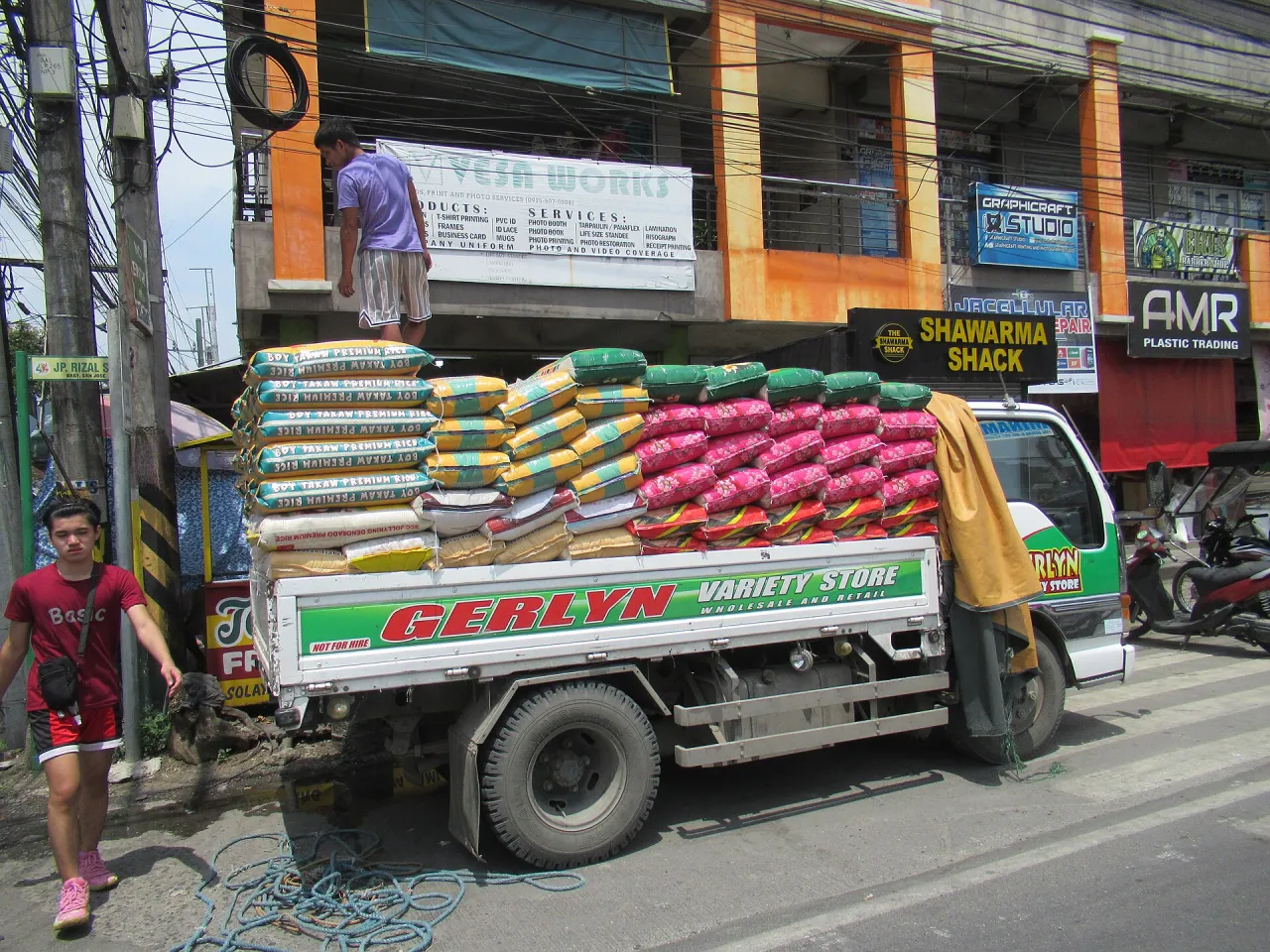
A store can look full and still leave its manager unsure which rice belongs to which delivery, what has already been sold, and which stack needs attention first. Rice lot records turn that uncertainty into a set of decisions the storekeeper can explain. The aim is a reliable link between a physical batch, its movement history and its current condition.
Featured image: RamaGaspar · CC BY-SA 4.0 · Source
For a Nigerian mill, cooperative or grain trader, the first improvement can be a clearly labelled stack and a ledger that is updated when work happens. Software becomes useful after the team agrees what a lot means and who can change its record. Starting with a complicated system before settling those questions usually makes reconciliation harder.
Build rice lot records around a physical batch
Give each accepted delivery a unique lot reference. A simple combination of receipt date and a sequence number can work, provided the reference is never reused. Write it on the receipt, the stock card and the location label. Keep the supplier reference alongside it so that an enquiry can be traced back to the original delivery.
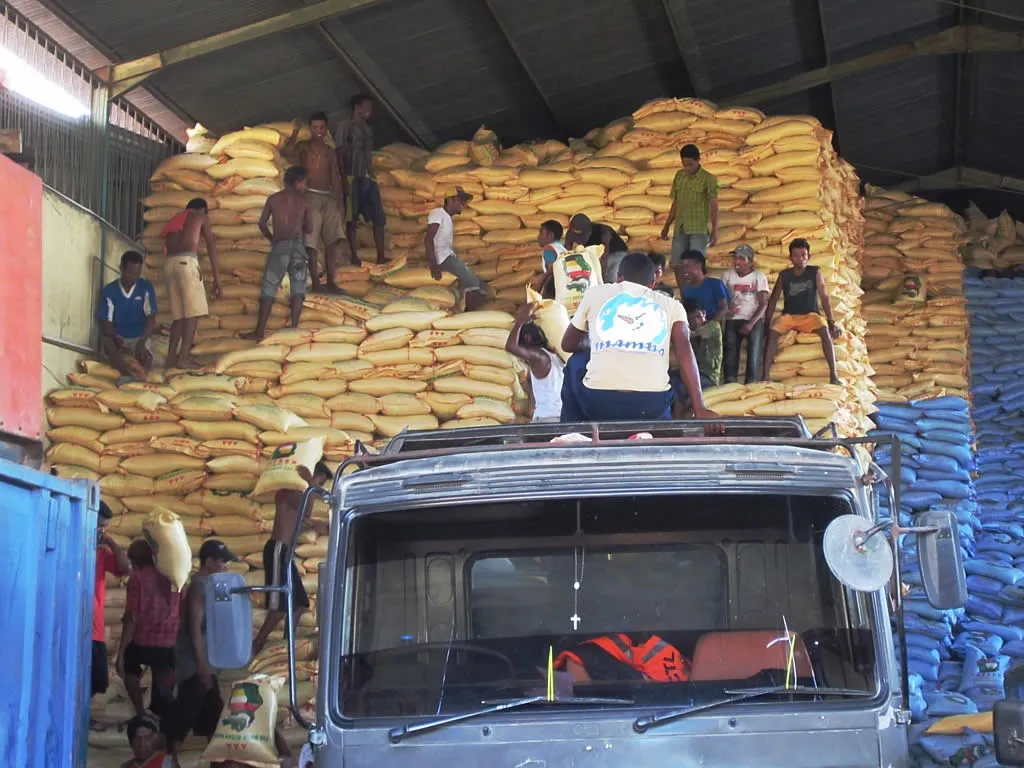
Define the boundary of the lot before mixing grain. Different delivery dates, varieties, processing stages or quality assessments can require separate records. If batches are deliberately combined, document the contributing references and create a new reference for the combined lot. Retaining that connection is more useful than silently carrying one supplier’s label onto a mixed stack.
The FAO guidance on store management describes stack cards and records of movements and inspections. Its practical lesson for a smaller enterprise is straightforward: a balance becomes much easier to check when it points to an identifiable place in the store.
Keep quantities and condition in the same conversation
Record the quantity received, the unit used, the location and the person accepting delivery. A bag count and a measured weight answer different questions. Where both are available, retain both. Do not assume that every bag carries the same weight simply because the packaging looks similar.
Beside the movement record, keep the intake assessment and subsequent inspection notes. Record an actual reading when a suitable instrument and competent operator are available. Mark an assessment as pending when it has not been performed. A blank field should never be interpreted as a passed check.
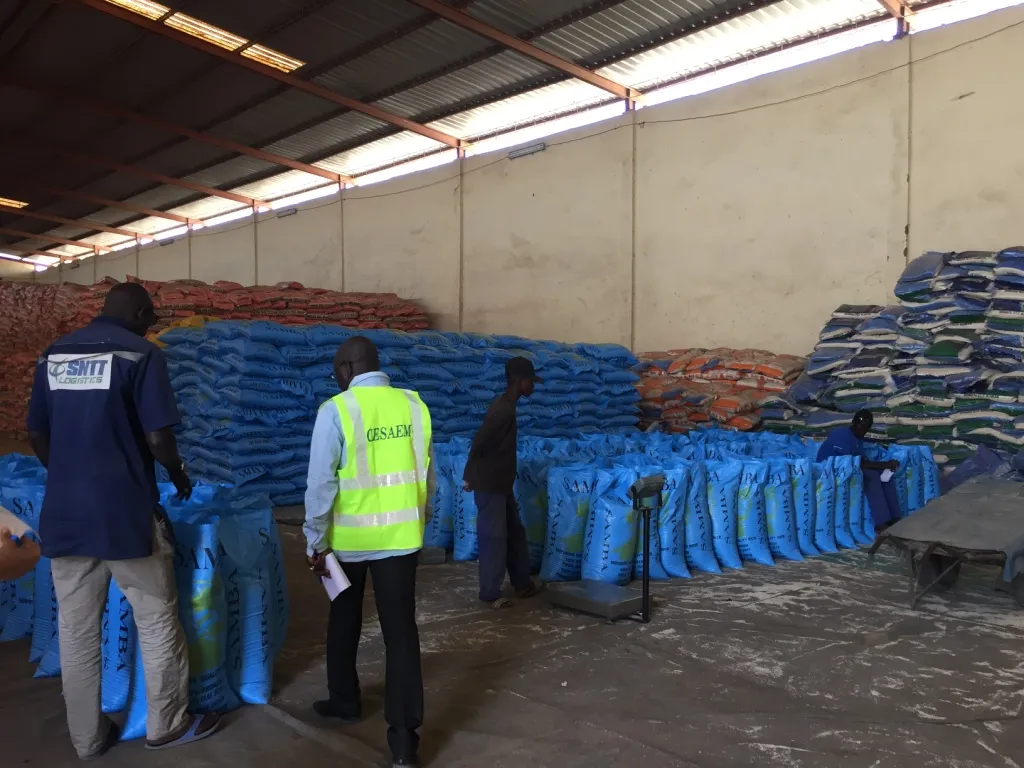
This article proposes a recordkeeping workflow, rather than a treatment specification. Decisions about grain safety, drying and pest control need appropriate technical assessment. The ledger’s job is to make the observations, responsible person and resulting action traceable.
Record each movement before the next shift takes over
Use one movement line for each receipt, dispatch, transfer or approved adjustment. Include the date, lot reference, quantity in, quantity out, balance, document reference and operator. Moving bags between two store locations changes the location record even when total stock remains the same.
For example, imagine an illustrative lot with 120 bags received and 35 dispatched. The expected bag balance is 85. If five of those bags move to a separate inspection area, the total is still 85, with 80 in the original location and five in the inspection area. Recording only the dispatch would leave the next shift searching for apparently missing stock.
Keep a correction visible. Add the reason, the reference supporting it and the person authorising it. Erasing yesterday’s figure to make today’s balance look right removes the evidence needed to understand the discrepancy.

Reconcile the store without hiding differences
At an agreed interval, compare the ledger balance with a physical check. Start with a defined set of lots so staff know exactly what is being counted. Pause movements for that area during the check, or maintain a separate record of movements that occur while counting continues.
Investigate differences in a useful order: unit conversion, unposted dispatch, transfer to another location, counting error and damaged packaging. These are possibilities to check, not explanations to assume. Record an unresolved difference openly and assign someone to investigate it.
A manager should be able to follow a difference from discovery to resolution. That means keeping the original count, the investigation note and any authorised adjustment connected. A spreadsheet can do this, but a well-kept paper ledger can also establish the discipline.
Make release decisions visible
A stock balance tells the team what is present. A release status tells it what may be dispatched. Use clearly defined states such as awaiting assessment, available and on hold, with authority assigned for changing each state. A salesperson should be able to see that a lot is on hold without being able to clear the hold informally.
FAO’s separate discussion of grain operations and stock maintenance also emphasises identified stocks and documented actions. That guidance concerns larger reserve operations, but the separation between an operating action and its authorisation is useful when designing a smaller store’s procedures.
Start with one store area this week
Choose a manageable group of lots, label them, agree the units and nominate the person responsible for updating the record. Reconcile that area, test a real dispatch and ask the next shift to locate the remaining stock using the record alone. The questions they ask will expose the fields that need clearer instructions.
G-Consulting’s agriculture, consultancy and capacity-building work provides the wider business context for this approach. Begin with a record people can use consistently, then extend it across the store. A useful system should help the team explain where a batch came from, what happened to it and why the next action is appropriate.