

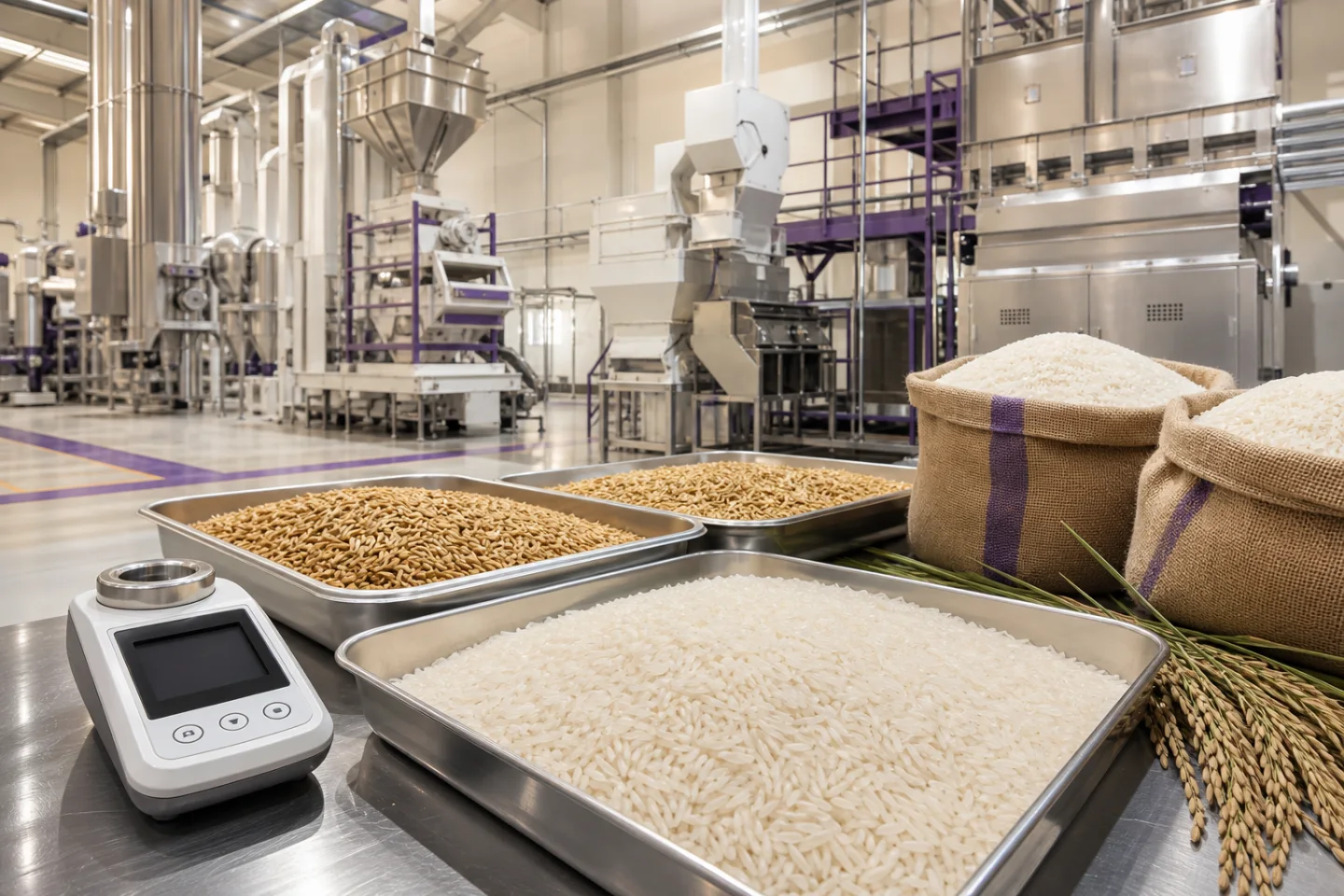
A mill cannot manufacture excellent grain from poor paddy; it can only preserve, separate and add value to the quality it receives. Effective rice milling quality control in Nigeria therefore begins at procurement and continues through sampling, moisture management, cleaning, conditioning, dehusking, whitening, grading, packaging, storage and dispatch.
The objective is consistent saleable rice with strong milling recovery and head rice yield, controlled broken grain, low foreign matter, safe moisture, reliable cooking quality and traceable batches. The system does not need to be complicated, but every result must lead to a clear accept, hold, rework or reject decision.
1. Define a written paddy specification
Agree what the mill will buy and how price or rejection is determined. The specification should cover variety, moisture range, foreign matter, immature or damaged grain, insect activity, odour, discolouration and any food-safety concern. Explain it to suppliers before delivery.
Varietal mixing matters. Different grain dimensions and milling behaviour make one machine setting unsuitable for the entire batch, increasing breakage and inconsistency.
2. Take a representative intake sample
A handful from the top of a truck is not representative. Take increments from different positions, combine them, reduce to a working sample and protect it from moisture change. Record supplier, vehicle, date, lot, sample points and test results.
Keep a sealed reference sample for an agreed period. It supports supplier feedback, investigation and resolution if the delivered batch later performs poorly.
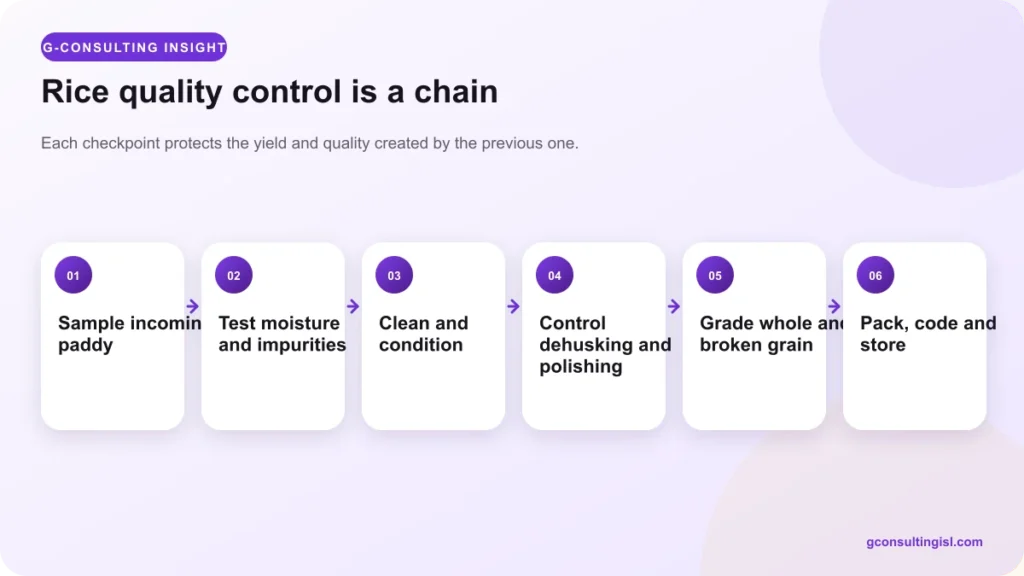
3. Control moisture before processing
FAO guidance explains that high moisture accelerates heating, mould, fermentation and pest activity, while inappropriate drying and conditioning can increase kernel cracking and breakage. Use a calibrated moisture meter and a documented sampling method.
Do not rely on one reading. Check several points, especially when a batch contains grain from different farms or drying conditions. If the batch is wet or uneven, segregate it and follow an approved drying or tempering process. Retest before release.
4. Remove foreign matter early
Stones, sand, stalks, dust, metal and weed seeds reduce quality, damage equipment and distort recovery calculations. Inspect pre-cleaners, sieves, aspirators, destoners and magnets at a defined frequency. Weigh or estimate removed material and report persistent problems to suppliers.
Calculate milling performance using clean paddy input, not the gross weight of contaminated delivery. Otherwise procurement quality and mill efficiency become confused.

5. Standardise conditioning and parboiling
Where parboiling is used, control soaking water quality, time, temperature, steaming, drainage and drying. Uneven treatment produces mixed colour, texture and milling behaviour. Drying must be timely and even; grain should not be packed or milled while unsafe moisture remains.
Write the process for each product and variety group, record deviations and train operators to recognise under- and over-treatment.
6. Set and verify the milling line
Monitor dehusking efficiency, separator performance, whitening pressure, polishing, grading and aspiration. Excessive pressure may make rice look whiter while increasing breakage and removing more valuable layers than the market requires.
At start-up, after a variety change and at scheduled intervals, take samples from key points. Compare whole kernels, brokens, husk carryover, bran, colour and temperature. Link results to machine settings and maintenance condition.
7. Measure yield correctly
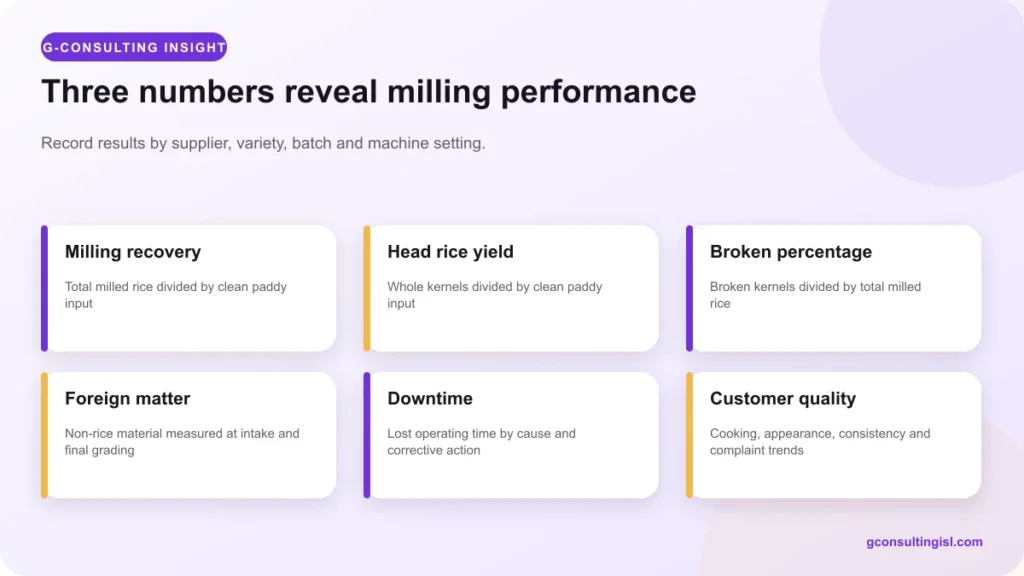
Three figures should be visible to the production manager:
- Milling recovery: total milled rice divided by clean paddy input.
- Head rice yield: whole kernels divided by clean paddy input.
- Broken percentage: broken kernels divided by total milled rice.
Record by supplier, variety, lot, shift and machine setting. A fall in head rice yield may come from field drying, storage, moisture variation, aggressive settings or worn equipment; the batch record helps locate the cause.
8. Grade the finished rice
Use a defined sampling and test method for moisture, whole and broken kernels, foreign matter, damaged or discoloured grain, red kernels where relevant, odour and infestation. Check cooking performance periodically for the target market.
Do not mix off-specification product into a good batch to hide the result. Segregate, investigate and make a documented rework, downgrade or rejection decision.
9. Protect quality in packaging and storage
Use food-suitable packaging with reliable seals and accurate weight. Each pack or lot should be traceable to production date, batch and product specification. Store finished rice on pallets, away from walls and moisture, with pest control, stock rotation and routine inspection.
Packaging claims must match the product. Consistency earns repeat purchase more reliably than attractive artwork alone.
10. Use records to improve suppliers and the mill
A minimum batch record should include supplier, variety, gross and clean weight, intake tests, drying or parboiling record, machine settings, downtime, recovery, head rice, brokens, final grade, packaging quantity, hold or release decision and corrective action.
Review monthly trends. Reward suppliers who consistently meet specification, coach those with correctable issues and investigate equipment or process changes when multiple suppliers show the same performance problem.
Daily rice mill quality checklist
- Test and record a representative intake sample.
- Verify moisture-meter checks and calibration status.
- Inspect cleaning and foreign-matter removal.
- Confirm batch identity is preserved through processing.
- Check machine settings after start-up and changeover.
- Measure recovery, head rice and brokens.
- Inspect finished product and packaging seals.
- Keep held product physically separated.
- Clean the line and control pests safely.
- Review deviations before the next shift.
G-Consulting works across agricultural enterprise, processing and capacity development. Explore our rice mill and agribusiness services, learn about technical training programmes or discuss a quality-improvement assignment.
Frequently asked questions
What is the most important rice quality-control point?
No single point works alone, but representative intake sampling and moisture control strongly affect storage, machine performance, recovery and breakage.
Why does head rice yield fall?
Common causes include cracked paddy, uneven moisture, poor drying, varietal mixing, aggressive milling settings and worn or poorly adjusted equipment.
Should the mill test every batch?
Yes. Each delivery and production batch should have a defined sampling and release process. Test frequency within a run should reflect volume, variability and risk.
Is whiter rice always better?
No. Excessive whitening can increase breakage and remove more bran layers without creating value for the target customer. The correct degree depends on specification and market preference.