

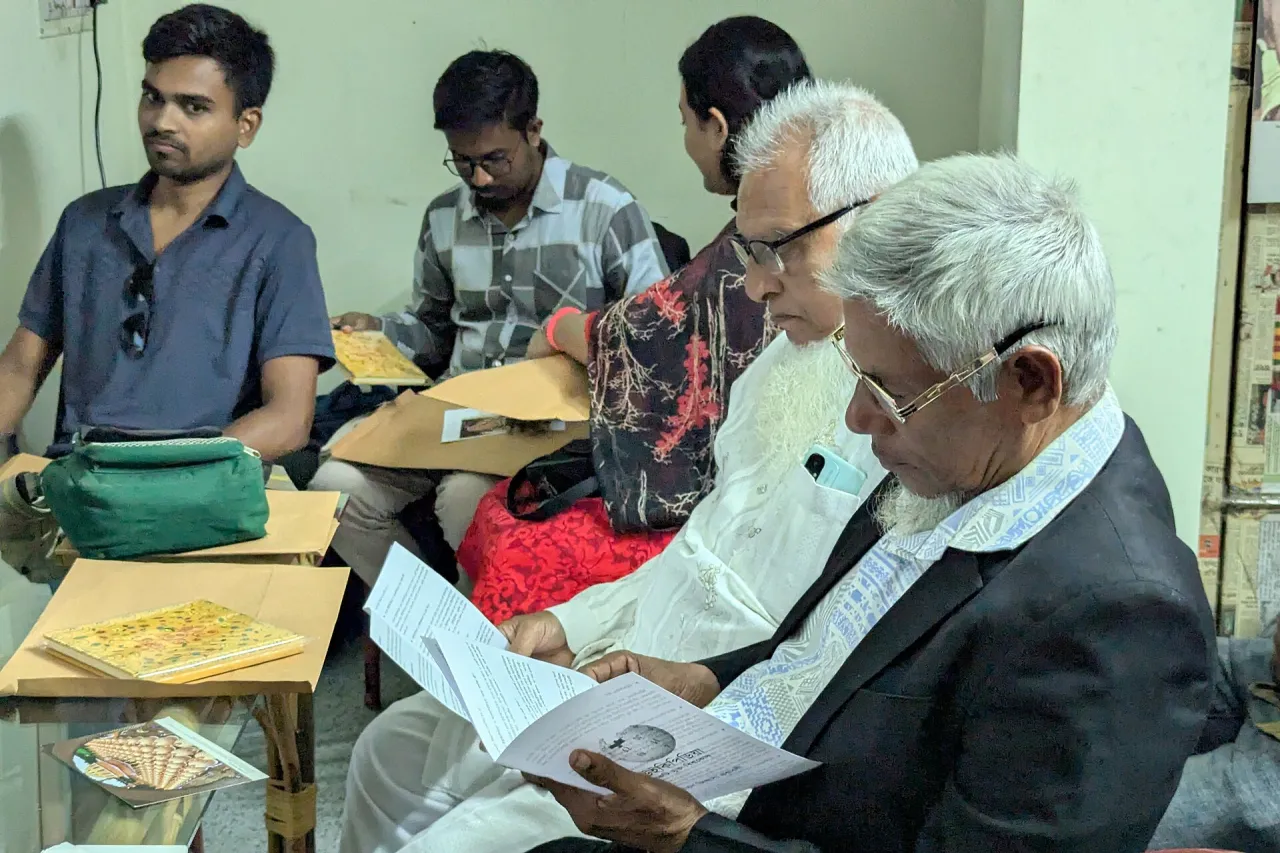
A colleague returns from a workshop with useful notes, then becomes the only person who knows how to apply them. When that colleague changes roles or takes leave, the improvement becomes difficult to repeat. A training handover gives the team a practical way to retain the new skill without expecting everyone to attend the same session.
Featured image: ROCKY · CC BY-SA 4.0 · Source
The handover works best when it centres on a real task. A folder full of slides may explain the subject, but another staff member still needs to know where to begin, what a successful result looks like and when to ask for help. A short task guide, a demonstration and a supervised attempt can make those questions easier to answer.
Design a training handover around one useful task
Start with a task that matters to the receiving team. Examples include preparing a weekly stock summary, checking whether a customer enquiry has all required information, or producing a meeting action record. Keep the first task narrow enough for someone to demonstrate from beginning to end.
Write down its purpose and the person who uses the result. Then identify the inputs, access permissions and materials required. A colleague cannot repeat the task reliably when a vital template is stored in a personal account or the required approval exists only as an informal arrangement.
The International Labour Organization describes work-based learning as learning in a real working environment. The handover method proposed here applies that general principle to an everyday team task; it is not a claim that a short internal exercise is a formal apprenticeship or qualification.
Write the guide while performing the work
Ask the trained colleague to perform the task and describe the decisions being made. Capture the starting point, the important steps and the checks before completion. Avoid documenting every mouse movement when the useful knowledge is the reason for choosing one option over another.
For an illustrative weekly stock summary, the guide might explain which source record is authoritative, how the reporting period is selected, how transfers are handled and who reviews an unexplained difference. These decision points help the next person understand the work instead of copying an output they cannot explain.

Include an example using fictional or properly anonymised information. Remove customer details, credentials and other sensitive material before sharing it. Store the guide in the team’s approved location and link to the current template rather than distributing competing copies in several message threads.
Let the receiving colleague try it
A handover is incomplete while the original trainee performs every step. Give the receiving colleague a suitable practice task and let them use the guide. The original trainee should observe where the instructions become unclear and ask the colleague to explain important decisions.
Keep this exercise proportionate to the consequences of an error. A practice report can use fictional figures. A process involving payments, regulated decisions or sensitive records may require a controlled training environment and an authorised supervisor. Learning an instruction does not grant the authority to carry out a protected action.
When the colleague gets stuck, record the missing explanation. Repeating the demonstration more loudly will not repair a guide that assumes knowledge the reader does not have. Improve the instructions, then let the colleague retry the unfinished part.

Capture exceptions before they become folklore
Routine steps are often easy to document. The difficult knowledge sits in exceptions: a missing reference, a late submission, an unexpected result or a request outside the normal process. Include a small section describing the warning signs and the person responsible for deciding what happens next.
Use a clear stopping point. For example, an unexplained stock difference can be referred to the store manager instead of being hidden through an unauthorised adjustment. A customer request containing incomplete information can return for clarification instead of being approved on guesswork.
Keep the exception section brief enough to use during work. If it becomes a large collection of unrelated cases, group it by decision and link to the relevant policy. The task guide should help someone find the right authority, rather than quietly replacing it.
Give the guide an owner and a review trigger
Put a named role, a version date and a review trigger on the guide. Review it when the system changes, the underlying policy changes or staff discover a repeated ambiguity. An arbitrary review date is less useful if a major process change has already made the instructions unreliable.

UNESCO’s lifelong-learning work places learning across different stages and settings of life. Within a team, a modest way to support that idea is to make useful knowledge accessible after the original training event. The guide remains a working aid that can improve through experience.
Leave the team with a repeatable result
At the end of the handover, check whether the receiving colleague can locate the approved inputs, perform the task, explain the important checks and identify the escalation point. Keep a note of any practice still required. Attendance alone does not answer these questions.
For organisations planning staff development, G-Consulting’s training and consultancy practice is a relevant starting point for discussing the work that needs to improve. Ask for the expected task and the handover arrangement to be considered alongside the workshop itself. That gives the new learning a clearer route into the team’s daily work.


